Appearance
13.13 — Literature, Art and Language
Books and their authors, paintings and their painters, and the words behind both.
Who wrote what
Who wrote the Iliad and the Odyssey, and what is the Homeric question? Attributed to Homer; the question is whether one person wrote them, and the evidence points to centuries of oral composition with formulaic phrasing.
Which epic does not contain the Trojan horse? The Iliad. It covers seven weeks of the tenth year and ends with Hector's funeral, before the city falls.
Who wrote the Aeneid, and what did he ask for? Virgil, who asked on his deathbed that it be burned because it was unrevised. Augustus overruled him.
Who wrote the Divine Comedy, and what are its three parts? Dante, in Italian rather than Latin: Inferno, Purgatorio, Paradiso.
Who wrote Don Quixote, and what makes the second volume remarkable? Cervantes. In the second volume, published ten years later, the characters have read the first one and argue with a fraudulent sequel somebody else published in between.
Who wrote Paradise Lost, and under what condition? John Milton, after going completely blind, dictating to daughters and secretaries.
Who wrote The Canterbury Tales? Geoffrey Chaucer, the first major literary work in English rather than French or Latin.
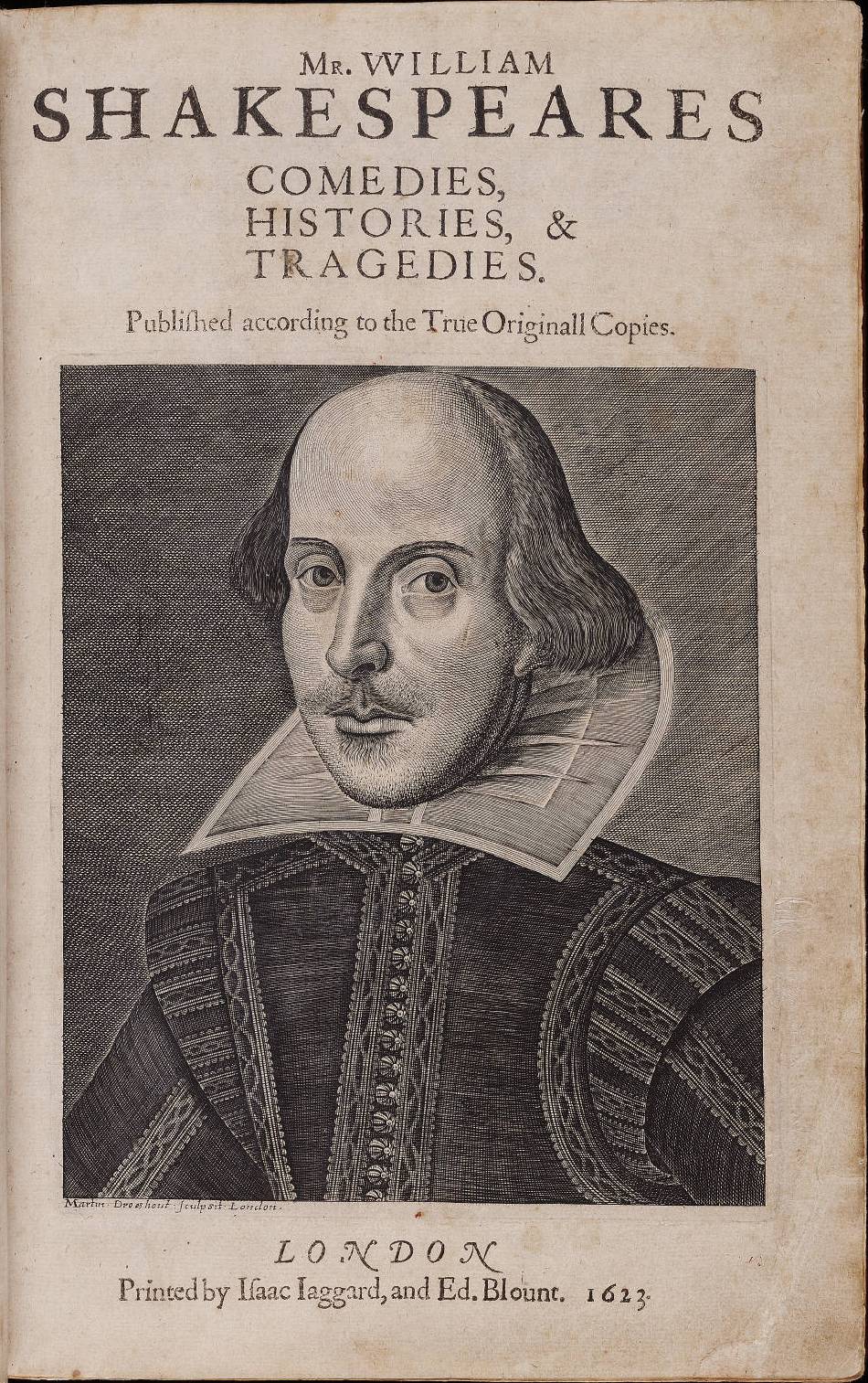
How many plays did Shakespeare write, and how many survive only through the First Folio? Around 38 plays; eighteen survive only because two colleagues collected them in 1623.
Which Shakespeare play is longest, and which is shortest? Hamlet and The Comedy of Errors.
Who wrote War and Peace, Crime and Punishment and Anna Karenina? Tolstoy, Dostoevsky and Tolstoy. Tolstoy denied War and Peace was a novel at all.
Who wrote Ulysses, and what day does it cover? James Joyce; 16 June 1904, now marked as Bloomsday. Each chapter is written in a different style, which is why it is hard.
Who wrote One Hundred Years of Solitude, and what movement is it associated with? Gabriel García Márquez, and magical realism.
Who wrote Things Fall Apart, and why does it matter? Chinua Achebe, 1958, written explicitly as a response to European novels about Africa.
Who wrote 1984 and Brave New World, and how do their warnings differ? Orwell and Huxley. Orwell feared a boot on a face; Huxley feared pleasure and distraction would make coercion unnecessary.
Who wrote The Origin of Species, and who nearly beat him to it? Charles Darwin, 1859; Alfred Russel Wallace sent him the same theory in a letter in 1858, which forced Darwin into print.
Who wrote The Wealth of Nations, and how often does the invisible hand appear? Adam Smith, 1776; once in over nine hundred pages.
Who wrote The Communist Manifesto and Das Kapital? Marx and Engels for the first, Marx for the second.
Who wrote The Prince and the Arthashastra? Machiavelli, 1513, and Chanakya, around the fourth century BCE — eighteen centuries earlier and considerably more detailed on espionage.
Who wrote A Brief History of Time? Stephen Hawking, and it is the standard example of a bought-and-unfinished book.
Which are the best-selling books of all time? The Bible by an enormous margin, then the Quran, then works like Don Quixote, A Tale of Two Cities and the Harry Potter series.
Which book is most translated after religious texts? The Little Prince by Antoine de Saint-Exupéry, in over 500 languages.
Indian literature
Who wrote the Ramayana and the Mahabharata? Valmiki and Vyasa by tradition. The Mahabharata, at about 100,000 verses, is the longest epic poem in the world.
Which Sanskrit poet wrote Abhijnanashakuntalam and Meghaduta? Kalidasa. Goethe wrote a poem about the first when it reached Europe in 1789.
Who wrote the Panchatantra, and how far did it travel? Traditionally Vishnu Sharma. It went to Persian, then Arabic as Kalila wa Dimna, then Hebrew, Latin and nearly every European language.
Who wrote the Tirukkural, and what is it? Thiruvalluvar — 1,330 Tamil couplets on virtue, wealth and love, deliberately non-sectarian.
Who wrote the Ramcharitmanas, and in what language? Tulsidas, in Awadhi, in the sixteenth century.
What is Sangam literature? A body of about 2,400 Tamil poems from roughly the third century BCE to the third century CE, secular and concerned with love and public life, with many named women poets.
Who was the first Indian and first Asian to win the Nobel Prize in Literature? Rabindranath Tagore, 1913, for Gitanjali — which he had translated into English prose himself on a sea voyage.
Whose national anthems did Tagore write? India's and Bangladesh's — the only person to have written two national anthems.
Who wrote Anandamath, and what song is in it? Bankim Chandra Chattopadhyay, and Vande Mataram.
Who wrote Godan and Gaban? Premchand, in Hindi and Urdu, on rural poverty and debt.
Who wrote Discovery of India and The Story of My Experiments with Truth? Nehru, largely in prison, and Gandhi.
Who wrote Wings of Fire? A. P. J. Abdul Kalam, with Arun Tiwari.
Which Indian writers have won the Booker Prize? Salman Rushdie (1981, as a British citizen), Arundhati Roy (1997), Kiran Desai (2006) and Aravind Adiga (2008). Geetanjali Shree won the International Booker in 2022, the first for a Hindi work.
Who wrote Midnight's Children, and what else did it win? Salman Rushdie; it later won the Booker of Bookers as the best winner in the prize's history.
Who wrote Malgudi Days, and where is Malgudi? R. K. Narayan, and Malgudi is fictional. His brother R. K. Laxman drew the Common Man cartoons.
Who was Saadat Hasan Manto? The Urdu writer of the most unflinching short stories about Partition. He was tried for obscenity six times and never convicted.
Which award is India's highest literary honour, and which is given per language? The Jnanpith, and the Sahitya Akademi Awards, given annually in each of 24 languages.
Who wrote in Bengali and had a novel filmed as Pather Panchali? Bibhutibhushan Bandyopadhyay.
Art
Who painted the Mona Lisa, and why is it famous? Leonardo da Vinci — and it became the world's most recognisable painting after it was stolen from the Louvre in 1911 and missing for two years.
Who painted the Sistine Chapel ceiling, and did he lie on his back? Michelangelo, over four years, standing with his head tilted back, not lying down. He considered himself a sculptor and resented the job.
Who painted The Starry Night, Guernica and The Persistence of Memory? Van Gogh, Picasso and Dalí.
Who painted The Last Supper, and what condition is it in? Leonardo, and poor — he used an experimental technique on dry plaster that began deteriorating within his lifetime.
Who painted The Scream, and how many versions are there? Edvard Munch, and there are four, in paint and pastel.
Which artist cut off part of his ear, and what did he sell? Van Gogh, who sold very little in his lifetime and was supported by his brother Theo.
Who invented linear perspective, and how was it demonstrated? Brunelleschi, around 1420, with a painted panel, a peephole and a mirror in front of the actual building.
What is sfumato, and who perfected it? Building form through translucent glazes with no outline, so edges dissolve. Leonardo — and it is why the Mona Lisa's expression seems to shift.
What is chiaroscuro, and who is associated with it? Extreme contrast between light and dark, with figures emerging from blackness. Caravaggio.
Name the movements in order. Renaissance, Baroque, Neoclassicism, Romanticism, Realism, Impressionism, Post-Impressionism, Fauvism, Cubism, Futurism, Dada, Surrealism, Abstract Expressionism, Pop Art, Conceptual art.
Where does the name Impressionism come from? A hostile review of Monet's Impression, Sunrise in 1874.
What technology made painting outdoors possible? Paint in metal tubes, patented in 1841. Before that, paint was mixed in the studio and did not travel.
Who founded Cubism, and what did it reject? Picasso and Braque, from 1907, rejecting the single viewpoint that perspective had established five centuries earlier.
Which Indian painters should you know? Raja Ravi Varma, who put Hindu deities into oil painting and mass lithography; Abanindranath Tagore of the Bengal School; Nandalal Bose, who illustrated the Constitution; Amrita Sher-Gil; M. F. Husain, S. H. Raza, F. N. Souza and V. S. Gaitonde of the Progressive Artists' Group; and Jamini Roy.
Which Indian folk painting traditions should you name? Madhubani from Bihar, Warli from Maharashtra, Pattachitra from Odisha and Bengal, Kalamkari from Andhra, Gond from central India, Phad from Rajasthan, Tanjore from Tamil Nadu.
Where are the oldest Indian paintings? The Ajanta caves in Maharashtra, from about the second century BCE, and the rock shelters at Bhimbetka in Madhya Pradesh, some around 10,000 years old.
Were Greek statues white? No — they were brightly painted, and the paint has weathered off. The white ideal comes from Renaissance and eighteenth-century taste.
Which sculptures should you recognise? The Venus de Milo, the Winged Victory of Samothrace, Michelangelo's David and Pietà, Rodin's The Thinker, the Terracotta Army, and the Chola bronze Nataraja.
What is the most expensive painting ever sold at auction? Leonardo's Salvator Mundi, $450 million in 2017, with an attribution that specialists genuinely dispute.
Language and words
Which language has the most native speakers, and which the most total speakers? Mandarin Chinese by native speakers; English by total, with roughly three times as many second-language speakers as native ones.
How many languages are there, and how fast are they disappearing? About 7,000, with something like 40 per cent endangered and one dying roughly every two weeks.
What is the difference between a language and a dialect? No linguistic test works. Hindi and Urdu are mutually intelligible and counted separately; Mandarin and Cantonese are not intelligible and counted together. A language is a dialect with an army and a navy.
Which is the oldest written language still in use? Contested, with Tamil, Chinese, Hebrew and Greek all having claims depending on the criterion.
How many official languages does India recognise? 22 scheduled languages. India has no national language, and Hindi and English are the union's official languages.
Which script do most Indian languages use, and where did it come from? Descendants of Brahmi, which is the ancestor of Devanagari, Bengali, Tamil, Telugu, Kannada, Malayalam and also Thai, Burmese, Khmer and Tibetan.
What is an abugida, and why does it fit Indian languages? A script where each consonant carries an inherent vowel, changed by attached marks — so one written unit maps onto one spoken syllable.
Where did the alphabet come from? Proto-Sinaitic, around 1800 BCE, whose letters were pictures used for their initial sound. The letter A began as an ox's head.
Who deciphered Egyptian hieroglyphs, and using what? Champollion in 1822, using the Rosetta Stone and his knowledge of Coptic. Thomas Young had established that cartouches spelled sounds phonetically.
Which ancient scripts have never been read? The Indus script, Linear A, Rongorongo, and the Voynich manuscript's script.
Why is English spelling so irregular? Because printing froze spellings in the middle of the Great Vowel Shift, and because scholars inserted letters — the b in debt, the s in island — to make words look more Latin.
Why do we farm cows and eat beef? Because English-speaking peasants tended the animal and French-speaking nobility ate the meat, after 1066. The same split gives pig/pork, sheep/mutton, calf/veal.
Which English words come from Indian languages? Shampoo, pyjamas, bungalow, jungle, loot, thug, khaki, chutney, cot, bangle, guru, pundit, juggernaut, catamaran, mango, curry, veranda, dinghy, jute, teak, avatar, karma, yoga, sugar, orange, candy.
What is a palindrome, an anagram and an onomatopoeia? A word reading the same backwards; letters rearranged into another word; and a word imitating a sound.
What is a contronym? A word meaning its own opposite — cleave, sanction, dust, oversight, left, fast.
What is the longest word in English? The chemical name for a protein is technically longest; among dictionary words, pneumonoultramicroscopicsilicovolcanoconiosis and antidisestablishmentarianism are the usual answers.
Which pangram contains every letter? "The quick brown fox jumps over the lazy dog."
What is the etymology of "serendipity", "robot" and "meme"? Coined by Horace Walpole in 1754 from a Persian tale about the princes of Serendip; from Czech robota, forced labour, in Čapek's 1920 play; and by Richard Dawkins in 1976 for a unit of cultural transmission.
Which brand names became generic words, and what did it cost? Aspirin, escalator and thermos all lost trademark protection by becoming generic. Which is why Xerox, Adobe and Google publish guidance asking people not to use their names as verbs.
What comes next
The next page is economy, business and brands — the money side, which quizzes ask about more than most people expect.