Appearance
8.4 — The Wonders of the World
A tourist list written by a Greek in the second century BCE, of places within reach of a Greek traveller, which has been copied and updated ever since without anybody quite acknowledging its origin.
The ancient seven
Who decided the original list, and what was on it?
Greek writers compiled several versions from about the second century BCE. The list is essentially a travel guide — a set of things worth going to see from the Greek-speaking Mediterranean, which is why nothing from India, China or the Americas appears. The compilers had no idea those places existed in any detail.
The standard seven are:
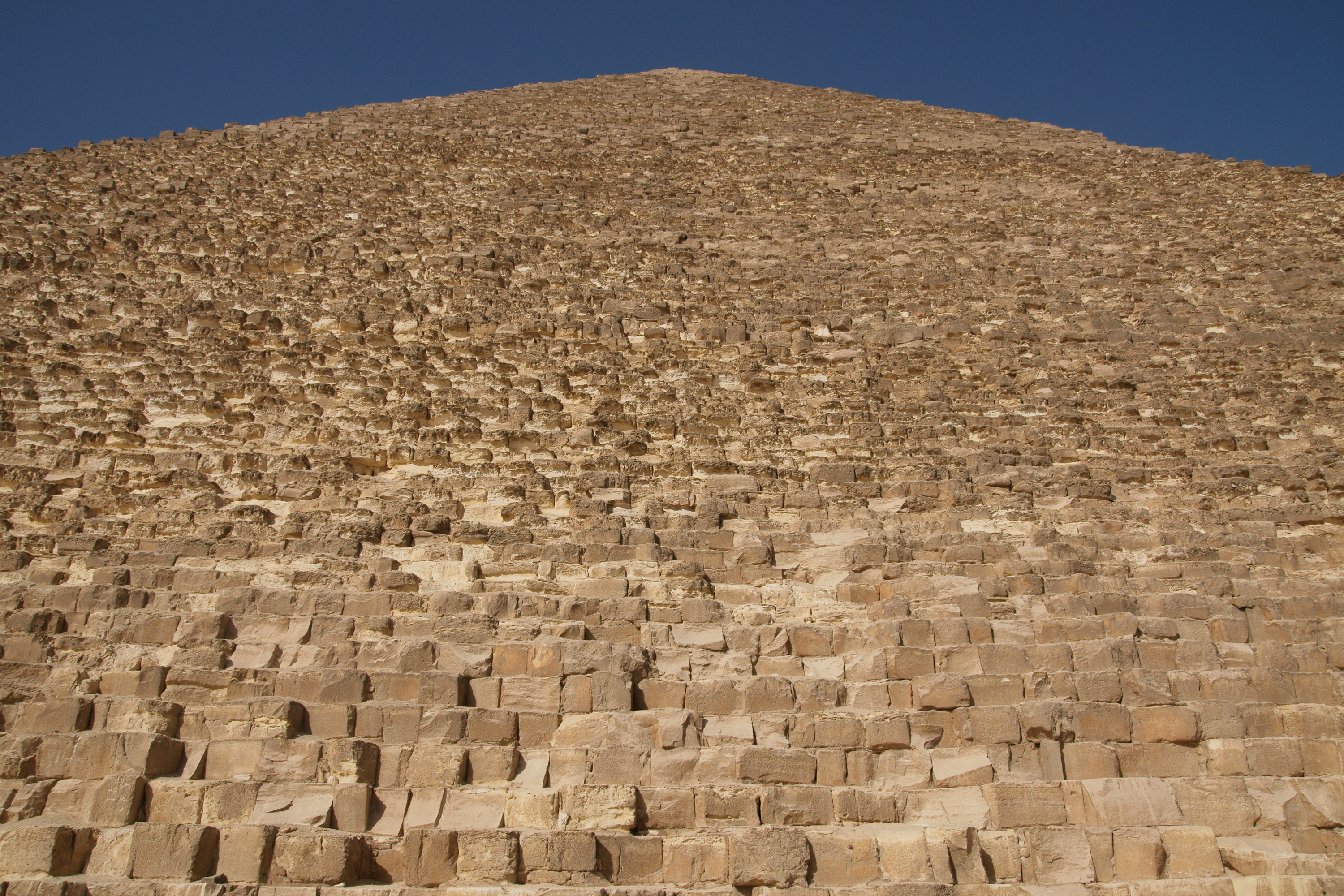
The Great Pyramid of Giza (about 2560 BCE, Egypt). The Hanging Gardens of Babylon (Iraq, possibly). The Statue of Zeus at Olympia (about 435 BCE, Greece). The Temple of Artemis at Ephesus (Türkiye). The Mausoleum at Halicarnassus (Türkiye). The Colossus of Rhodes (Greece). The Lighthouse of Alexandria (Egypt).
Only the pyramid survives, and it is also the oldest by around two thousand years.
What happened to the other six?
Fire, earthquake, and being taken apart for materials, which is the fate of most large structures.
The Temple of Artemis was destroyed by arson in 356 BCE by a man named Herostratus, who did it explicitly to be remembered. The authorities responded by making it a capital offence to mention his name, which failed comprehensively. It was rebuilt, then destroyed again by Goths, and its stone reused.
The Colossus of Rhodes, a bronze statue about 33 metres tall, stood for only 54 years before an earthquake around 226 BCE broke it at the knees. The pieces lay where they fell for around 800 years and were eventually sold as scrap. It did not straddle the harbour entrance — that image comes from a sixteenth-century engraving and is structurally impossible in bronze.
The Lighthouse of Alexandria, one of the tallest structures in the world for centuries, was damaged by successive earthquakes and finally collapsed by the fifteenth century. Its stones were used to build a fort on the same spot, and blocks have since been found underwater in the harbour.
The Statue of Zeus was probably taken to Constantinople and lost in a fire. The Mausoleum stood for sixteen centuries and was dismantled by crusaders for a castle.
Did the Hanging Gardens exist?
Genuinely uncertain, and it is the most interesting item on the list.
No Babylonian text mentions them, which is startling — Babylonian records are extensive and their kings were not modest. No archaeological trace has been found at Babylon. Every description comes from Greek and Roman writers, none of whom claim to have seen the gardens, and several of whom were writing centuries after the supposed construction.
The most credible alternative, argued by the Assyriologist Stephanie Dalley, is that the gardens were real but at Nineveh, about 500 kilometres away, built by the Assyrian king Sennacherib around 700 BCE — for which there is textual evidence, sculptural depiction, and remains of an aqueduct system. Sennacherib describes a screw-like device for raising water, which would solve the engineering problem of irrigating a terraced garden.
Nineveh was sometimes referred to as "Babylon" in later usage, which would explain the confusion.
The new list
Who chose the "New Seven Wonders"?
A private Swiss foundation, by public vote, announced in 2007. It has no official status of any kind, and UNESCO publicly distanced itself from it.
The winners: the Great Wall of China, Petra in Jordan, Christ the Redeemer in Rio, Machu Picchu in Peru, Chichén Itzá in Mexico, the Colosseum in Rome, and the Taj Mahal. The Great Pyramid was given honorary status after Egypt objected to it having to compete.
The voting was not controlled, allowed multiple votes per person, and was heavily campaigned on by national governments and tourist boards, several of which ran organised drives. Around 100 million votes were reported.
That does not make the list worthless — the seven are genuinely extraordinary places — but it is a popularity contest with promotion behind it, not an assessment, and the sites that lost include several that are more remarkable.
What is actually notable about each of the new seven?

The Great Wall is not one wall and not continuous. It is a set of walls built and rebuilt over roughly two thousand years by different dynasties, along different lines; most of what tourists visit is Ming, from the fifteenth and sixteenth centuries. Total length of all sections ever built is around 21,000 kilometres. And it is not visible from space, per 5.2.
Petra was the capital of the Nabataeans, a trading people who controlled the incense routes. Its buildings are carved into sandstone cliffs, top down, like Ellora. Its real achievement is water engineering: a system of dams, cisterns and ceramic pipes that supplied a city of perhaps 20,000 people in a desert and controlled the flash floods that funnel through the canyon approach.
Machu Picchu was built around 1450 and abandoned about a century later, probably as a royal estate rather than a city. Its stonework is fitted without mortar to tolerances that will not admit a knife blade, and it sits on two fault lines — the dry-stone construction lets the walls move and resettle in an earthquake rather than crack.
Chichén Itzá's main pyramid, El Castillo, has 91 steps on each of four sides plus the top platform, giving 365. At the equinoxes the stepped corner casts a shadow on the balustrade that reads as a serpent descending.
Christ the Redeemer (1931) is the youngest by a long way and is a reinforced concrete statue faced in soapstone tiles.
The Colosseum held perhaps 50,000 people and could be emptied in minutes through 80 numbered entrances with ticketing that assigned spectators to specific gates by class — an evacuation design still studied. Beneath the floor was a two-level basement with lifts and trapdoors for animals and scenery. Its missing stone was quarried out over centuries for Roman churches and palaces.
The Taj Mahal is covered in 8.3.
The ones that should be on a list
What did the lists miss?
A great deal, and mostly because of who was compiling them.
Angkor Wat in Cambodia is the largest religious structure in the world by area, built in the twelfth century, surrounded by a moat 190 metres wide, and originally the centre of a city that may have held three quarters of a million people — supported by an enormous hydraulic system of reservoirs and canals whose eventual failure is a leading explanation for the city's decline.
Borobudur in Java, a ninth-century Buddhist monument built as a single enormous stepped mandala with over 2,600 relief panels, which a pilgrim walks around and upward in a spiral.
The Nazca Lines, the Moai of Easter Island, Göbekli Tepe from 2.1, the Hagia Sophia, Timbuktu's mud-brick mosques, the rock-hewn churches of Lalibela in Ethiopia — each carved downward into volcanic rock like Ellora — and the Great Zimbabwe, whose dry-stone walls were attributed by colonial-era writers to almost anybody except the local population, a claim that was official policy in Rhodesia and is now completely discredited.
And India alone would fill a list: Ellora, Ajanta, Konark, Hampi, Khajuraho, the Sanchi stupa, Rani ki Vav, and the Chola temples.
What are the natural wonders?
There is no agreed list, and several competing ones. The commonly cited natural seven are the Grand Canyon, the Great Barrier Reef, Mount Everest, the Northern Lights, Victoria Falls, Paricutin volcano, and the harbour of Rio de Janeiro.
Each of the first five is genuinely singular. The Grand Canyon exposes nearly two billion years of rock in one cut. The Great Barrier Reef is the largest structure on Earth built by living organisms, visible from orbit, and is losing coral to bleaching at a rate that will change what the entry says within a generation.
Paricutin is the strangest inclusion and deserves it: a volcano that appeared in a Mexican cornfield in 1943, in front of a farmer who was ploughing, grew to over 400 metres in a year, buried two villages, and stopped in 1952. It is the only volcano whose entire life cycle has been observed by science from the first day.
What is a UNESCO World Heritage Site, and does the status do anything?
A designation under a 1972 convention, for places of "outstanding universal value" to humanity, either cultural or natural. There are over 1,200.
It does several concrete things. It obliges the state to protect the site and report on it. It gives access to a fund for conservation. It creates international attention when a site is threatened, through a "World Heritage in Danger" list. And it is worth a great deal in tourism revenue, which is why states lobby hard for inscription.
It does not give UNESCO any power over the site, which is the common misunderstanding. Sovereignty remains entirely with the state, and UNESCO's only real sanction is publicity and, ultimately, delisting.
Delisting has happened three times. Dresden's Elbe Valley in 2009 over a road bridge built through it, an Arabian oryx sanctuary in Oman in 2007 after the protected area was reduced by 90 per cent for oil exploration, and Liverpool's waterfront in 2021 over dock redevelopment.
India has over 40 sites. Italy and China have the most.
The ones that are gone or going
Which wonders have been destroyed in living memory?
The Bamiyan Buddhas in Afghanistan, two standing figures 55 and 38 metres tall carved into a cliff in the sixth century, were destroyed by the Taliban with explosives in March 2001 after weeks of attempts with artillery and anti-aircraft fire failed to bring them down.
Palmyra in Syria, a Roman-era caravan city, was heavily damaged by ISIS in 2015, which destroyed the Temple of Bel and the monumental arch and murdered the site's 82-year-old head of antiquities, Khaled al-Asaad, who had refused to say where artefacts had been hidden.
Timbuktu's mausoleums were destroyed in 2012, and the perpetrator was convicted at the International Criminal Court in 2016 — the first conviction anywhere for the destruction of cultural heritage as a war crime.
Notre-Dame de Paris burned in April 2019, losing its spire and roof. It has been rebuilt, and the reconstruction used medieval carpentry techniques and around 2,000 oak trees.
What is threatening the rest?
Tourism, first and most awkwardly. Lascaux was closed to the public in 1963 because the carbon dioxide and body heat of visitors were destroying the paintings, and a full-scale replica is what people now visit. Machu Picchu, Venice, and several Indian monuments have introduced visitor caps or time slots.
Air pollution, which is the specific threat to the Taj Mahal: sulphur dioxide and particulates react with and stain the marble, and the Supreme Court of India has created a protected zone around it restricting industry and vehicles.
Water, in both directions. Rising sea level threatens Venice and low-lying coastal sites; falling groundwater threatens foundations, including the Taj's.
And conflict, which remains the fastest and most complete. Every list of what is at risk is essentially a map of where wars are.
What comes next
The last page of this Part covers the design of the ordinary — photography, posters, typefaces and objects, where most of the aesthetic decisions that actually reach people get made.