Appearance
2.6 — 1945 to the Present
The second half of the twentieth century has one strange headline: the two most heavily armed powers in history never fought each other directly. Everything else on this page happened in the space that fact created.
Independence and new countries
1947 — India and Pakistan

British rule ended at midnight on 14–15 August 1947, and the subcontinent was divided into two states.
The speed is the part that is hard to believe. Mountbatten advanced the date by about ten months to June 1948, then to August 1947. Cyril Radcliffe, a British lawyer who had never been to India, was given about five weeks to draw the border through Punjab and Bengal, working from outdated maps and census returns, with no time to visit the ground. The line was not published until two days after independence, so millions of people did not know which country they were in as the date passed.
Between ten and twenty million people moved, in the largest migration in human history, and somewhere between several hundred thousand and two million were killed. Radcliffe destroyed his papers, refused his fee, and never returned.
India's Constitution came into force on 26 January 1950 — the date chosen because Congress had declared independence on that day twenty years earlier. It is the longest written constitution of any sovereign country, and it granted universal adult suffrage immediately, to a population that was around 85 per cent illiterate, at a time when several European democracies still had not extended the vote to all women.
1948–1994 — the other independences
The pattern repeated across Asia and Africa within three decades: Indonesia in 1949, Ghana in 1957 as the first sub-Saharan African colony to become independent, then seventeen African countries in 1960 alone.
Many of the borders were the ones drawn by European powers at the Berlin Conference of 1884-85, which divided Africa among themselves with almost no reference to who lived there — which is why so many African borders are straight lines, and why several conflicts since have been between groups a border split or forced together.
South Africa is the outlier at both ends: formally independent from 1931, but under a legal system of racial separation, apartheid, from 1948. It ended with the first election open to all citizens in 1994, and Nelson Mandela, who had spent 27 years in prison, became president.
The Cold War
1945–1991 — a war that stayed cold
The United States and the Soviet Union emerged from the war as the only powers of the first rank, with incompatible systems and a shared border across a ruined Europe. They armed, competed and fought through other countries for forty-five years — Korea, Vietnam, Afghanistan, and proxy conflicts across Africa and Latin America — without ever fighting each other directly.
The reason is usually given as mutually assured destruction: once both sides could destroy the other even after being struck first, victory stopped being definable. Whether that logic held, or whether the world was repeatedly lucky, is a real question. The closest approach was the Cuban Missile Crisis of October 1962, thirteen days in which Soviet missiles in Cuba and an American blockade brought both sides to the edge.
The single most important person in that story is one most people have never heard of. On 27 October 1962, a Soviet submarine near the blockade line, out of radio contact and being depth-charged by American ships trying to force it to surface, prepared to fire a nuclear torpedo. Launch required the agreement of three officers. Vasili Arkhipov refused. A similar moment came in 1983, when Stanislav Petrov, watching a Soviet early-warning system that reported incoming American missiles, judged it a malfunction and did not report it up the chain. It was a malfunction — sunlight reflecting off high cloud.
1957 and 1961 — Sputnik and Gagarin
The Soviet Union put an 84-kilogram metal sphere into orbit on 4 October 1957. It did almost nothing — it transmitted a beep that any amateur radio operator could pick up — and that was the point. Anyone with a radio could hear that the Soviet Union had a rocket capable of reaching any point on Earth.
The American response was immediate and institutional: NASA was created in 1958, and the National Defense Education Act poured money into science and mathematics teaching. Yuri Gagarin's single orbit on 12 April 1961 raised the stakes again, and Kennedy committed to a moon landing six weeks later — before any American had orbited anything.
1969 — the moon

Armstrong and Aldrin landed on 20 July 1969 with about 25 seconds of fuel remaining, after Armstrong took manual control to avoid a boulder field, while the guidance computer was throwing alarms because it was being overloaded by a radar left in the wrong mode.
Three details that get lost. The computer's response to the overload is the impressive part: it was designed to shed low-priority tasks and keep the critical ones running rather than crash, which is why the landing continued. Margaret Hamilton's team at MIT had insisted on that against advice that it was unnecessary. The whole guidance computer had about 72 kilobytes of memory, less than a single photograph on your phone. And Michael Collins orbited alone in the command module, out of radio contact with Earth for 48 minutes on every pass behind the moon.
Twelve people walked on the moon between 1969 and 1972 and nobody has since. The reason is not capability but purpose: Apollo consumed around four per cent of the entire US federal budget at its peak, and once the political objective — beating the Soviet Union — was achieved, the funding had no argument behind it.
1989 — the wall comes down

The Berlin Wall opened on the evening of 9 November 1989, and it opened partly by mistake.
The East German government had drafted a new travel regulation intended to relieve pressure gradually. Günter Schabowski, the official announcing it at a press conference, had not read the briefing properly. Asked when it took effect, he shuffled his papers and said, "As far as I know, immediately, without delay." It was broadcast live. Crowds went to the crossings, the guards had no orders and could reach nobody who would give them any, and eventually one commander opened his barrier rather than order his men to fire on a crowd.
The Soviet Union itself dissolved on 26 December 1991. Fifteen countries appeared in place of one, and the largest arsenal of nuclear weapons ever assembled had to be consolidated from four newly independent states — an operation that went far better than anyone had a right to expect.
The machines
1947, 1958, 1971 — transistor, chip, microprocessor
Three steps, twenty-four years, and the entire modern world.
1947: Bardeen, Brattain and Shockley at Bell Labs made a working transistor — a switch and amplifier with no moving parts, no heat-up time, and a size measured in millimetres rather than centimetres. It replaced the vacuum valve, which was large, hot, fragile and power-hungry.
1958: Jack Kilby at Texas Instruments and, independently, Robert Noyce at Fairchild, built several components on a single piece of semiconductor with the connections formed in place. The integrated circuit removed the wiring, which had become the limiting factor — a machine with a hundred thousand hand-soldered joints fails at a joint.
1971: Intel's 4004 put an entire central processor on one chip: 2,300 transistors, designed by a small team for a Japanese calculator company. A modern phone processor holds well over ten billion.
Moore's Law is Gordon Moore's 1965 observation that the number of transistors on a chip was doubling roughly every year, later revised to two. It was never a law of physics. It was an industry target that became self-fulfilling because everybody planned around it, and it held for about fifty years.
1969 — ARPANET, and the idea of packets
Four university computers were connected in the United States in 1969. The first message crashed the system after two letters: they were trying to type LOGIN and got as far as "LO".
The important idea underneath is packet switching, developed independently by Paul Baran in America and Donald Davies in Britain. A telephone call reserves a circuit end to end for its whole duration. Packet switching instead chops the message into small pieces, each labelled with its destination, and lets every piece find its own way through the network, to be reassembled at the far end. If a link fails, the next packet simply goes another way, and no central authority has to know the whole route.
Baran's motivation at RAND was survivability under nuclear attack, which is the origin of the claim that the internet was designed to survive a nuclear war. Davies arrived at the same design purely to use expensive computers efficiently. The architecture is the same either way, and it is the reason the network has no centre to switch off.
1989–1993 — the web
Tim Berners-Lee, a British physicist at CERN, wrote a proposal in March 1989 for a system to link documents across the laboratory's incompatible computers, so physicists could find each other's papers. His manager's note on it read "Vague but exciting".
He built it on a NeXT computer over the following year: three things, all still in use, and all deliberately simple. HTML, a way to mark up a document and point at another. HTTP, a protocol for asking a server for a document. And the URL, an address scheme that can name any document anywhere.
The internet already existed. The web is what runs on top of it, and confusing the two is the most common mistake in this area — the internet is the road network, the web is one kind of traffic on it, alongside email, video calls and everything else.
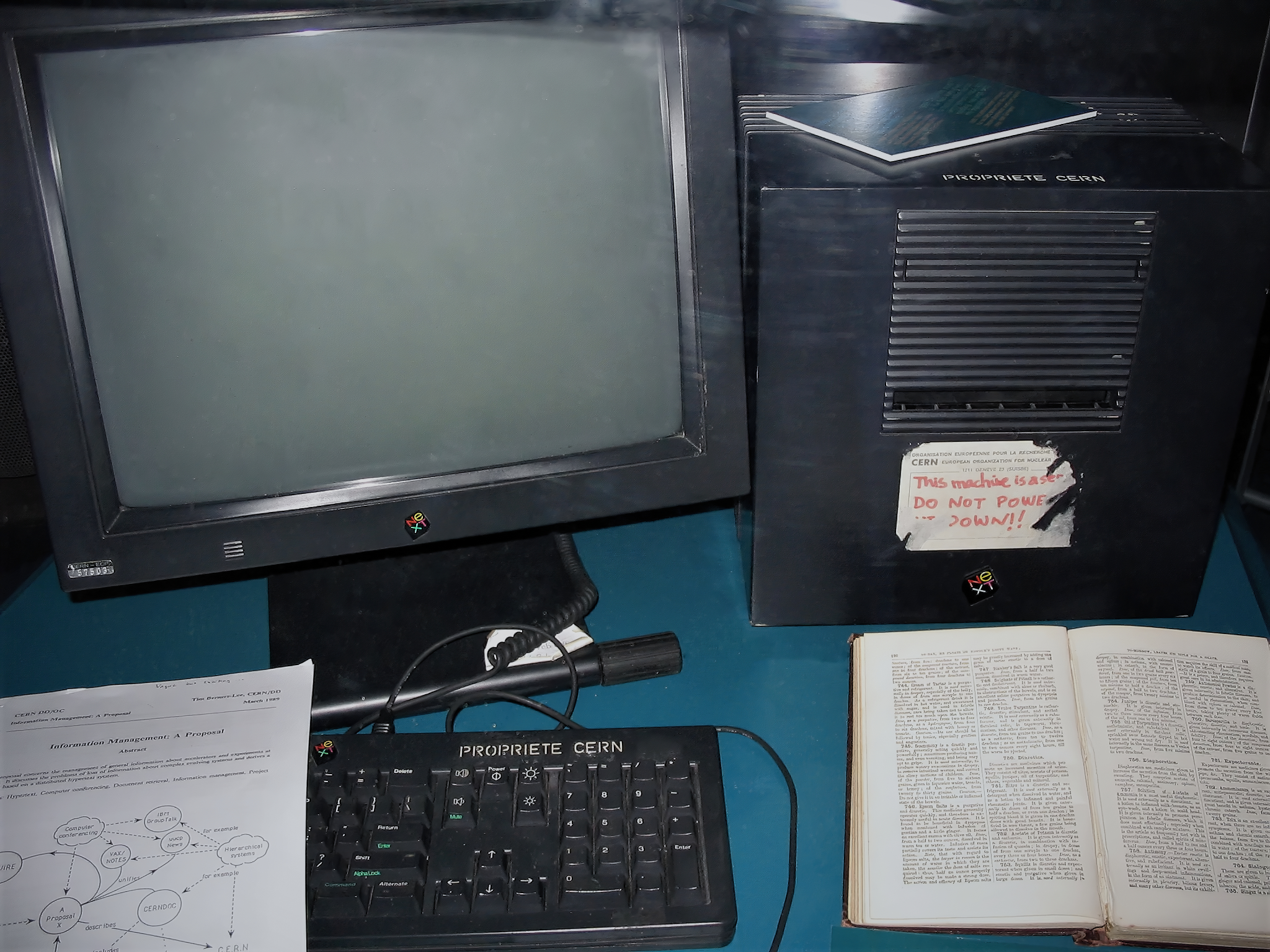
The decision that made it universal came on 30 April 1993, when CERN put the web technology into the public domain, royalty-free, forever. A competing system called Gopher had been more popular until its university announced licensing fees; usage collapsed almost immediately. Free and open beat better and licensed, in under a year, and there is no clearer natural experiment in the history of technology.
The turn of the century
1991 — India opens up
Facing a balance of payments crisis with foreign reserves covering about two weeks of imports, and having physically flown 47 tonnes of gold to London as collateral, the government of P. V. Narasimha Rao and finance minister Manmohan Singh dismantled a large part of the licensing system that had governed Indian industry since independence.
The Licence Raj had required government permission to start a business, to expand it, to change what it made, and to import almost anything, with import tariffs that reached into the hundreds of per cent. The 1991 reforms abolished industrial licensing for most sectors, devalued the rupee, cut tariffs and opened the door to foreign investment.
Growth rates roughly doubled over the following two decades and several hundred million people moved out of extreme poverty, while inequality widened and agriculture largely missed the gains. Both halves of that sentence are part of the record.
1996 and 1997 — a computer wins, and a sheep is cloned
Deep Blue lost a match to Garry Kasparov in 1996 and won the rematch in 1997. It searched around 200 million positions per second, and its strength came almost entirely from raw search plus hand-crafted evaluation rules written with grandmasters. It understood nothing. The programs that beat human champions at Go two decades later work in a fundamentally different way, learning evaluation from self-play rather than being told, which is why 2016 mattered more to researchers than 1997 did.
Dolly the sheep, announced in 1997, was cloned from a cell taken from an adult mammary gland. The reason it was a shock is that adult cells were believed to be permanently specialised — a udder cell could never go back to being an embryo. Dolly proved the specialisation is reversible, which is the root of the stem cell work in Volume V.
2001 onward — the twenty-first century so far
Any list this recent is a judgement rather than a record, so here is the judgement, briefly. 11 September 2001 and the wars that followed reshaped security, surveillance and travel for a generation. 2007 brought the smartphone into a form ordinary people would carry, putting a networked computer with a camera in several billion pockets within a decade. 2008 produced the deepest financial crisis since the 1930s, from mortgage lending repackaged until nobody could price the risk. 2020–2022 was a pandemic that killed millions and produced working vaccines in under a year, using a technology — messenger RNA — that had been developed over thirty patient years by researchers who struggled to get funding. And from 2022, large language models moved machine text and image generation from a research curiosity into general use, at a speed that has left the law, the schools and the economics unresolved.
Which of those will be in a list like this in a hundred years is not knowable now, and that is worth sitting with: the people living through 1440, 1859 or 1947 mostly did not know which of the year's events was the important one either.
What comes next
The last page of this Part turns to the calendar itself — why September is the ninth month when its name means seventh, why there is a leap year, why eleven days were once deleted from the calendar and people were not pleased, and why you work five days and rest two.