Appearance
9.1 — The Books Everyone Names
A short guide to the books that come up in conversation — what is actually in them, why they mattered when they appeared, and which of the famous facts about them are wrong.
The oldest
What is the oldest surviving story?
The Epic of Gilgamesh, written in cuneiform on clay tablets in Mesopotamia, with versions going back to around 2100 BCE and a standardised version from about 1200 BCE.
A king of Uruk, arrogant and oppressive, meets a wild man made by the gods to check him; they fight, become friends, and go on adventures. Then the friend dies, and the rest of the epic is Gilgamesh, terrified by mortality for the first time, travelling to find the one man who was granted eternal life. He is told plainly that he cannot have it, fails a test, loses the consolation prize, and goes home.
It ends with him looking at the walls of his city, which is the only thing of his that will outlast him.
It contains a flood narrative closely parallel to the one in Genesis — a man warned to build a boat, animals aboard, birds released to find land — and the recognition of that parallel when the tablets were deciphered in 1872 caused a public sensation in Victorian Britain, because it demonstrated that biblical material had older sources.
About a third of the epic is still missing, and new fragments turn up periodically. A tablet acquired in 2011 added twenty previously unknown lines.
What is in the Iliad and the Odyssey?
The Iliad covers about seven weeks in the tenth year of the Trojan War, and its subject is stated in its first word: rage. Achilles, the best fighter among the Greeks, is insulted by his commander, withdraws from the fighting, and stays out while his side is destroyed. He returns only when his closest companion is killed wearing his armour, and what follows is not heroism but slaughter and desecration.
It does not contain the Trojan horse, which most people assume. The horse is in the Odyssey and in later material. The Iliad ends with the funeral of Hector, before the city falls.
The Odyssey is a homecoming: ten years of it, with the cyclops, the sirens, Circe and the rest occupying a comparatively small part. Much of it is Odysseus's household in his absence, his son growing up, and the slow, suspicious business of a man returning to a home that has moved on.
The "Homeric question" is whether one person wrote them. The linguistic evidence indicates centuries of oral composition, with formulaic phrases — "swift-footed Achilles", "wine-dark sea" — that function as metrical building blocks a performer can assemble. Milman Parry demonstrated this in the 1930s by studying living oral poets in Yugoslavia and showing they used the same technique, which is one of the more elegant pieces of literary research ever done.
The plays
What do people get wrong about Shakespeare?
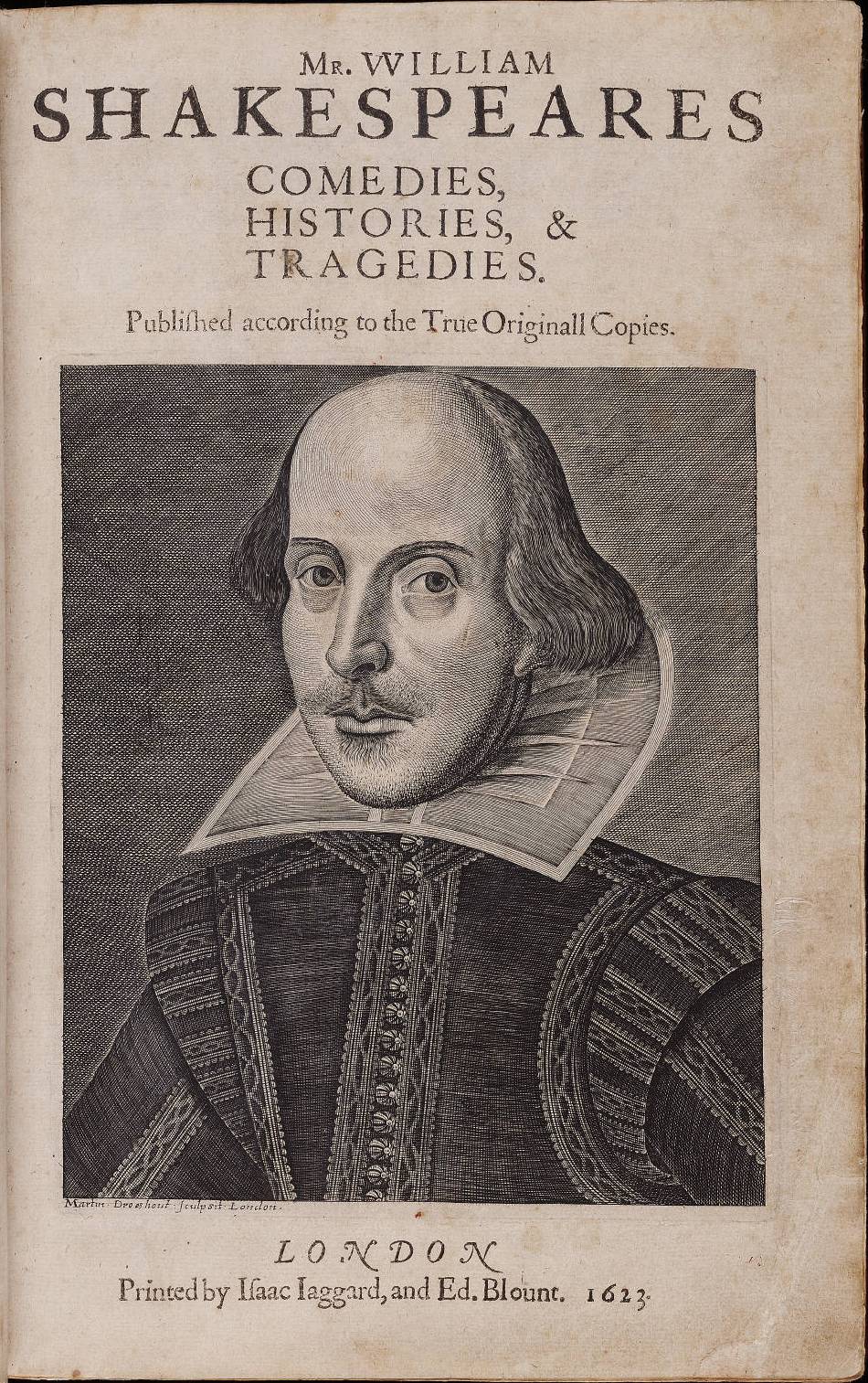
Several things, and the corrections are more interesting than the myths.
He did not invent as many words as claimed. The figure of 1,700 comes from counting first citations in the Oxford English Dictionary, and the dictionary's early editors read Shakespeare far more thoroughly than they read his contemporaries. Later corpus work has reassigned many of them. He was a heavy coiner; he was not uniquely one.
The plots are almost all borrowed. Hamlet, King Lear, Romeo and Juliet, Macbeth, Julius Caesar and Othello all come from existing chronicles, novellas or older plays. Originality of plot was not a value in his period; what you did with it was.
He nearly vanished. Half the plays had never been printed when he died. Two actors from his company, John Heminges and Henry Condell, compiled the First Folio in 1623 — and Macbeth, The Tempest, Twelfth Night, Julius Caesar and fourteen others survive only because of it.
The authorship question is not taken seriously by specialists. The proposals for Bacon, Oxford and Marlowe rest largely on the assumption that a glover's son from a market town could not have written them, which is not evidence, and the documentary trail attaching the plays to the man from Stratford is as good as it gets for any playwright of the period.
Which other plays get named?
The Greek tragedies: Sophocles' Oedipus Rex, in which a man investigating a plague discovers he is the cause of it — a detective story where the detective is the criminal, and the structure of the reveal is why it has never dated. Aeschylus's Oresteia, which ends by replacing blood vengeance with a court, and is therefore a founding text about law. Euripides' Medea, which is the first major play to take a woman's rage seriously.
Sanskrit drama: Kalidasa's Abhijnanashakuntalam, probably fourth or fifth century, which reached Europe in translation in 1789 and had an immediate effect on German Romanticism — Goethe wrote a poem about it. The Natya Shastra, attributed to Bharata, is the theoretical text behind it, covering acting, staging, music and the theory of rasa, the emotional flavour a performance produces in the audience.
Chekhov, whose plays are the standard example of drama where the important thing is not said. Ibsen, whose A Doll's House in 1879 ended with a woman leaving her husband and children, and whose final door slam was reportedly the most argued-about sound in nineteenth-century Europe.
Beckett's Waiting for Godot, in which nothing happens twice, and which was first performed to bafflement and then had an unexpected success with an audience of prisoners at San Quentin, who understood waiting.
The novels
Which novels come up most, and what are they about?
Don Quixote (1605, 1615) is generally called the first modern novel. An elderly gentleman reads too many chivalric romances and goes out to be a knight. The second volume, published ten years later, is where it becomes extraordinary: the characters have read the first volume, are recognised by people who have read it, and Quixote encounters a fraudulent sequel that somebody else published in the interval and argues with it.
War and Peace (1869) follows several families through the Napoleonic invasion of Russia, and contains long essays on history in which Tolstoy argues that great men do not determine events. Tolstoy denied it was a novel at all.
Crime and Punishment (1866): a student murders a pawnbroker on the theory that extraordinary people are entitled to, and the book is what happens to him afterwards. It was written in serial instalments while Dostoevsky was in debt from gambling.
Ulysses (1922) covers one day in Dublin, 16 June 1904, mapping loosely onto the Odyssey. It is difficult because each chapter is written in a different style, from newspaper headlines to a parody of the history of English prose. It was banned in the United States until a 1933 court decision.
One Hundred Years of Solitude (1967), the standard text of magical realism: a family over seven generations in a town in Colombia, where the impossible is described in the same register as the ordinary.
Things Fall Apart (1958), Chinua Achebe's novel of an Igbo community before and during the arrival of British administration, written explicitly as a response to European novels about Africa.
Beloved (1987), Toni Morrison's novel about a woman who escaped slavery and what she did to prevent her child being taken back, based on a real case.
1984 and Brave New World are usually cited together and predict opposite failures. Orwell's is a boot on a face — surveillance, coercion, controlled language. Huxley's is pleasure and distraction, with nobody needing to be coerced because nobody wants anything else. Neil Postman's summary is worth keeping: Orwell feared those who would ban books, Huxley feared there would be no reason to ban a book because nobody would want to read one.
Which are the famously unfinished or unpublished?
Kafka instructed his friend Max Brod to burn his manuscripts. Brod published them instead — The Trial, The Castle, Amerika — and openly said he had told Kafka he would not comply, which means Kafka chose an executor who had announced he would refuse.
Virgil asked for the Aeneid to be burned because it was unrevised. Augustus overruled it.
Gogol burned the second part of Dead Souls himself, days before dying.
Harper Lee published one novel and then, fifty-five years later, an earlier draft of it appeared as Go Set a Watchman under circumstances that many people found troubling given her age and health.
Reference and the strange cases
How was the Oxford English Dictionary made?
By post, over seventy years, with volunteers.
The project began in 1857 and the aim was to record every English word with quotations showing its use through history. The only way to gather that evidence was to have people read books and send in slips of paper with quotations on them. Millions of slips arrived.
One of the most prolific contributors, William Chester Minor, sent in over ten thousand from Broadmoor, a hospital for the criminally insane, where he was held after killing a man in London during a delusional episode. He was an American army surgeon. The editor, James Murray, corresponded with him for years before discovering the circumstances.
The first edition was completed in 1928, seventy-one years after it started and forty-four years after the first instalment. Murray had died thirteen years earlier, having got as far as T.
What is the most printed book, and the most translated?
The Bible by a wide margin on both counts, with total production estimated in the billions and translation into over 700 languages in full and parts of it into more than 3,500.
The most translated non-religious book is generally given as The Little Prince, in over 500 languages, followed by Pinocchio.
The most stolen book from libraries is consistently reported as the Guinness Book of Records, which is either a good joke or a fact, and is probably both.
What are the books nobody has read?
Several famous books are far more cited than read, and the phenomenon is worth noticing rather than mocking.
Finnegans Wake, Joyce's last book, written over seventeen years in an invented dream-language. A Brief History of Time was for a period the standard example of a bought-and-abandoned book, which produced a half-serious measure called the Hawking Index, based on how far into an ebook readers stop highlighting.
The Bible and the great religious texts are cited far more than read continuously, which is a real fact about how scripture functions — it is used through selected passages, liturgy and interpretation rather than read front to back.
And Adam Smith's Wealth of Nations, where the most quoted phrase appears once in nine hundred pages, per 2.3.
What comes next
The next page is about poetry — how it works, why it survives, and the prizes that decide which poets are known.