Appearance
11.4 — The Famous Problems
Some questions are easy to state and take centuries to answer. A few are still open. This chapter collects the ones worth being able to explain at a dinner table — what they actually claim, why they resisted, and what turned on them.
1. Fermat's Last Theorem
Around 1637 Pierre de Fermat wrote in the margin of his copy of Diophantus:
If n \gt 2, the equation a^n+b^n=c^n has no solution in positive integers. I have discovered a truly marvellous proof of this, which this margin is too narrow to contain.
For n = 2 there are infinitely many solutions — the Pythagorean triples of Chapter 3.2. For every higher power, none at all.
The claim is so simple that a schoolchild can understand it, and it took 358 years to prove.
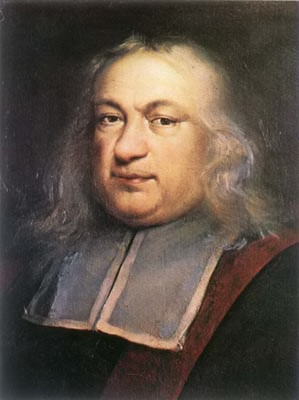
The long middle. Euler proved n=3. Sophie Germain, working under a male pseudonym because women were barred from the institutions, proved a general result covering a whole class of exponents. Kummer's attack on it in the 1840s invented ideal numbers and founded modern algebraic number theory. The failed attempts were more valuable than the theorem — an entire field exists because of them.
The breakthrough came from an unexpected direction. In 1985 Gerhard Frey observed that a counterexample to Fermat would produce an elliptic curve with impossible properties — one that could not be modular, a technical condition relating it to a completely different kind of object. The Taniyama–Shimura conjecture asserted that every such curve is modular. So proving that conjecture would prove Fermat.
Andrew Wiles worked on it in secret for seven years in his attic, telling almost nobody, publishing small unrelated results to avoid suspicion. He announced the proof in June 1993 at Cambridge, at the end of a three-lecture series whose title gave nothing away until the last minute.
And then a referee found a gap. A crucial step did not work. Wiles spent over a year trying to repair it, came close to giving up, and in September 1994, working with his former student Richard Taylor, found that an approach he had abandoned three years earlier fixed exactly the failing part. The complete proof appeared in 1995, running to 129 pages and using machinery that did not exist in Fermat's lifetime.
Did Fermat have a proof? Almost certainly not. He never mentioned the claim again in forty years of correspondence, and he did later publish a proof for n=4 — which would be redundant if he had a general argument. The most likely explanation is that he had an idea, thought it worked, and later noticed it did not.
2. The Riemann Hypothesis
The most famous unsolved problem in mathematics.
The Riemann zeta function extends Euler's sum from Chapter 11.1 to complex inputs:
\zeta(s) = \sum_{n=1}^{\infty}\frac{1}{n^s}
The hypothesis, stated in 1859: every non-trivial zero of \zeta has real part exactly \frac12. All of them lie on one vertical line in the complex plane.

Why anyone cares. Euler's product formula from Chapter 11.1 links \zeta to the primes. Riemann turned that link into an exact formula for how many primes lie below a given number — and the zeros of \zeta control the error term.
The Prime Number Theorem of Chapter 1.5 says the count is approximately \frac{x}{\ln x}. The Riemann Hypothesis says the error in that approximation is as small as it could possibly be. It is the statement that the primes, which look erratic, are distributed as regularly as anything random-looking can be.
The evidence. Over ten trillion zeros have been computed and every one lies on the line. Hardy proved in 1914 that infinitely many do. None of this is a proof, and Chapter 8.3's warning about the Mertens conjecture — disproved with a smallest counterexample beyond 10^{10^{40}} — is exactly why numerical evidence at this scale settles nothing.
What depends on it. Hundreds of published theorems begin "assuming the Riemann Hypothesis". It affects estimates in cryptography, in algorithm analysis, and throughout number theory. Proving it would immediately promote all of them from conditional to established.
It is one of the seven Millennium Prize Problems, with a million dollars attached — and it is the one the money is least likely to influence.
3. The Millennium Prize Problems
Announced in 2000 by the Clay Mathematics Institute, each carrying a million dollar prize. One is solved.
P versus NP. If a solution can be checked quickly, can it be found quickly? Volume I, 1.7 covers it. Most researchers believe P ≠ NP; nobody can prove it either way. If P = NP, most modern cryptography would collapse, and a vast range of currently intractable optimisation problems would become easy. This is arguably the most consequential open problem in any science.
The Riemann Hypothesis, above.
The Poincaré Conjecture — solved. Roughly: any three-dimensional shape without holes can be deformed into a sphere. Grigori Perelman proved it in 2003 using Ricci flow, a technique from differential geometry.
He then refused everything. He declined the Fields Medal in 2006 — the only person ever to do so — and the million dollars in 2010. He said the prize was unfair because Richard Hamilton, who developed the Ricci flow method, deserved equal credit, and that he was disturbed by the ethics of the profession. He withdrew from mathematics entirely and lives quietly in St Petersburg.
Navier–Stokes existence and smoothness. Chapter 6.4's fluid equations. Do smooth solutions always exist in three dimensions, or can a solution develop a singularity in finite time? We simulate these equations daily for weather, aircraft and blood flow without knowing whether they always behave.
Yang–Mills existence and mass gap. A problem from quantum field theory that physicists rely on and mathematicians cannot yet justify rigorously.
The Birch and Swinnerton-Dyer conjecture. About the rational solutions of elliptic curves — the same objects that appeared in Fermat's proof, and the same ones underlying elliptic-curve cryptography.
The Hodge conjecture. The most technical of the seven, about which geometric shapes inside a complex algebraic variety can be built from algebraic pieces.
4. The Four Colour Theorem
Chapter 3.6 covered it: four colours suffice for any flat map. Conjectured 1852, proved 1976 by Appel and Haken.
The proof reduced the problem to 1,936 configurations and checked each by computer. No human has ever verified it by hand, and no human ever could — the case analysis is too large.
This started a real argument about what a proof is. If a proof's purpose is to convince a human, and no human can read it, is it one? If its purpose is to establish truth reliably, is a machine less reliable than a tired mathematician checking 1,936 cases?
The argument has largely settled in favour of accepting it, helped by a 2005 version verified end to end in the Coq proof assistant — which replaces trusting the original program with trusting a much smaller and heavily scrutinised proof checker.
The question has become more pressing since. Machine-assisted proofs are now routine, formal verification is standard for safety-critical software, and large language models are beginning to produce proof sketches. What counts as mathematical knowledge when the verification is mechanical is a live question, not a settled one.
5. Galois and the quintic
Chapter 2.3 said no formula in radicals exists for the general fifth-degree equation. The story behind that result is one of the most remarkable in the subject.
Niels Henrik Abel proved the impossibility in 1824, publishing at his own expense in a pamphlet so compressed that few could read it. He died of tuberculosis in 1829, aged 26, two days before a letter arrived offering him a professorship in Berlin.
Évariste Galois explained why. Not merely that the quintic is unsolvable, but exactly which equations are solvable and which are not, in terms of the symmetry structure of their roots. He invented group theory to do it.
Galois was a republican radical in the France of the 1830 revolution. He was expelled from school, imprisoned twice, and had two papers lost or rejected by the Academy — one by Cauchy, one by Fourier who died before reading it, and one returned by Poisson as "incomprehensible".
On 30 May 1832, aged 20, he was shot in a duel whose cause remains disputed. He died the next day. The night before, he wrote out his mathematical ideas in a long letter to a friend, with marginal notes reading "I have no time".
The letter contained the foundations of group theory, which is now one of the central structures in all of mathematics, and the language in which particle physics, crystallography and cryptography are written.
His work was published in 1846, fourteen years after his death, when Liouville finally understood it.
6. Problems that are simple and open
The Collatz conjecture. Take any positive integer. If even, halve it. If odd, triple it and add one. Repeat. Does every starting number eventually reach 1?
7 \to 22\to11\to34\to17\to52\to26\to13\to40\to20\to10\to5\to16\to8\to4\to2\to1
Verified for every number up to about 2^{68}. Nobody can prove it. Paul Erdős said "mathematics is not yet ready for such problems" and offered $500 for a solution. A schoolchild can understand the rule; nobody can prove the claim.
Goldbach's conjecture. Every even number above 2 is a sum of two primes. Chapter 1.5 mentioned it. Open since 1742.
The twin prime conjecture. Chapter 1.5, and Yitang Zhang's 2013 breakthrough that reduced the gap from unbounded to 70 million, since improved to 246.
Perfect numbers. A perfect number equals the sum of its proper divisors: 6 = 1+2+3, 28 = 1+2+4+7+14. Euclid characterised the even ones. Nobody knows whether any odd perfect number exists, after 2,300 years.
7. Why unsolved problems matter
They drive the development of new mathematics. Fermat's theorem produced algebraic number theory. The quintic produced group theory. The Königsberg bridges produced graph theory. The value of a problem is frequently the machinery invented to attack it, not the answer.
They mark the boundary of understanding. A simply stated problem that resists for centuries is telling you that something is not understood, and finding out what is where progress comes from.
They are a reasonable answer to "what is mathematics for". Almost none of the pure mathematics in this volume was developed for the applications it now has. Number theory was famously useless and now secures every transaction. Non-Euclidean geometry was an exercise in changing an axiom and now describes spacetime. Ramanujan's mock theta functions were incomprehensible and now appear in black hole physics.
Hardy, in 1940, wrote proudly that his own work in number theory had no practical application whatsoever and never would. He was completely wrong within forty years, and that is the standard cautionary tale about predicting which mathematics will matter.
One question was never on any of these lists, because it is not about a theorem but about the whole enterprise: can mathematics prove that mathematics is sound? The answer arrived in 1931, and it was no.
Every formula above, built from scratch
None of the results in this chapter are worth memorising, because each one can be rebuilt in under a minute from something simpler. What follows is that rebuilding, one result at a time, so the formula and the reason for it sit on the same page as the explanation that needed them.
The prime number theorem
\pi(x)\sim\frac{x}{\ln x}, \qquad \text{more precisely } \pi(x)\sim\operatorname{Li}(x) = \int_2^x\frac{dt}{\ln t}
where \pi(x) counts the primes up to x — nothing to do with the circle constant, an unfortunate collision of notation.
What it says. Near a large number x, roughly one in every \ln x numbers is prime. Near a million, \ln(10^6) = 13.8, so about one number in fourteen is prime. Near 10^{100}, about one in 230.
How well it does.
| x | \pi(x) | x/\ln x | \operatorname{Li}(x) |
|---|---|---|---|
| 10^3 | 168 | 145 | 178 |
| 10^6 | 78,498 | 72,382 | 78,628 |
| 10^9 | 50,847,534 | 48,254,942 | 50,849,235 |
The simple form is about 5% low even at a billion; the integral form is right to five significant figures.
The status of the proof. Conjectured by Gauss at 15, in 1792, from studying tables of primes. Proved independently by Hadamard and de la Vallée Poussin in 1896, using the Euler product of §3 and complex analysis. An elementary proof, avoiding complex numbers, was found by Selberg and Erdős in 1949 and is harder, not easier — one of the surprises of the subject.
Why it matters practically. It tells you how long it takes to find a large prime by guessing. To find a 2048-bit prime for RSA, test random odd numbers: about \frac{\ln(2^{2048})}{2} = 710 candidates on average. That is a few seconds of work, and it is the reason RSA key generation is possible at all.
The Riemann hypothesis
\zeta(s) = \sum_{n=1}^\infty\frac{1}{n^s}
extended to all complex s apart from s=1. The Riemann hypothesis states:
\text{every non-trivial zero of }\zeta\text{ has real part exactly } \tfrac12
What it would mean. The prime number theorem says \pi(x)\approx\operatorname{Li}(x). The Riemann hypothesis says the error in that approximation is as small as it could possibly be, of size about \sqrt x\ln x. In plain terms: the primes are as evenly distributed as a random-looking sequence could be, with no unexpected clumps or gaps anywhere, forever.
It is unproved after 165 years. Over 10^{13} zeros have been checked and every one lies on the line. Hundreds of published theorems begin "assuming the Riemann hypothesis". It is one of the seven Millennium Prize problems, with a million dollars attached, and the money is not why anybody works on it.