Appearance
3.4 — The Second Law, Engines and the Carnot Limit
Drop a hot stone into cold water and the water warms while the stone cools. Now imagine the film run backwards: lukewarm water sitting quietly, and then, unprompted, the stone gets hot while the water around it gets cold. Energy is conserved in both versions. The first law has nothing whatever to say against the second one. And yet you know instantly which film is running backwards.
That instinct is the second law of thermodynamics, and this chapter turns it into a number you can compute.
The number matters commercially as well as philosophically. A modern coal power station burns fuel and throws away roughly 60 % of the energy as warm water and warm air. That is not sloppy engineering. It is close to the best that the laws of physics allow, and the limit was worked out in 1824 by a 28-year-old French engineer who did not know what heat was, did not have the first law, and got the right answer anyway.
Two statements that sound different and are not
The second law is usually given in one of two forms, both from the 1850s.
Clausius: heat cannot flow by itself from a colder body to a hotter one. "By itself" is the crucial phrase. Your refrigerator moves heat from cold food to a warm kitchen, but it is plugged in — the transfer is paid for with work.
Kelvin–Planck: no process can take heat from a single reservoir and turn all of it into work with no other effect. You cannot cool the ocean and drive a ship with the energy released, even though the ocean holds unimaginably more energy than any fuel tank.
These look like two separate prohibitions. They are one prohibition wearing two hats, and the way to prove it is to show that breaking either one lets you break the other.
Suppose you could break Kelvin–Planck. You have a magic engine that takes 100 J from a cold reservoir and produces 100 J of work with nothing else happening. Feed that work into an ordinary friction brake bolted to a hot reservoir, where it turns fully into heat. Net result: 100 J moved from cold to hot, and nothing else changed anywhere. That is Clausius broken.
Suppose instead you could break Clausius. You have a magic pipe that carries 100 J from cold to hot for free. Now run a perfectly ordinary engine between the two reservoirs — one that takes 150 J from the hot reservoir, produces 50 J of work and dumps 100 J into the cold one. Combine the two devices. The cold reservoir gains 100 J from the engine and loses 100 J down the magic pipe, so it ends up exactly as it began and can be ignored entirely. What is left is a machine that took 50 J from the hot reservoir and produced 50 J of work, with no other effect. That is Kelvin–Planck broken.
Each statement implies the other, so they are the same law. Take your pick of which to use for a given problem.
What an engine has to look like
Kelvin–Planck forbids the simple thing. You cannot just extract heat and get work. So what can you do?
You need two reservoirs. Take heat Q_H from something hot, convert some of it to work W, and dump the remainder Q_C into something cold. The cold reservoir is not a design flaw you could engineer away; it is the price of being allowed to operate at all.

The engine runs in a cycle, returning to its starting state each time round, so over one full cycle \Delta U = 0 and the first law gives:
W = Q_H - Q_C
Efficiency is what you wanted divided by what you paid for:
\eta = \frac{W}{Q_H} = \frac{Q_H - Q_C}{Q_H} = 1 - \frac{Q_C}{Q_H}
Read aloud: eta equals one minus Q-C over Q-H. The Greek letter \eta (eta) is the standard symbol for efficiency. To get \eta = 1 you would need Q_C = 0, which is exactly what Kelvin–Planck forbids. So every real engine has \eta < 1, and now the question is: how close to 1 can you get?
Carnot's argument
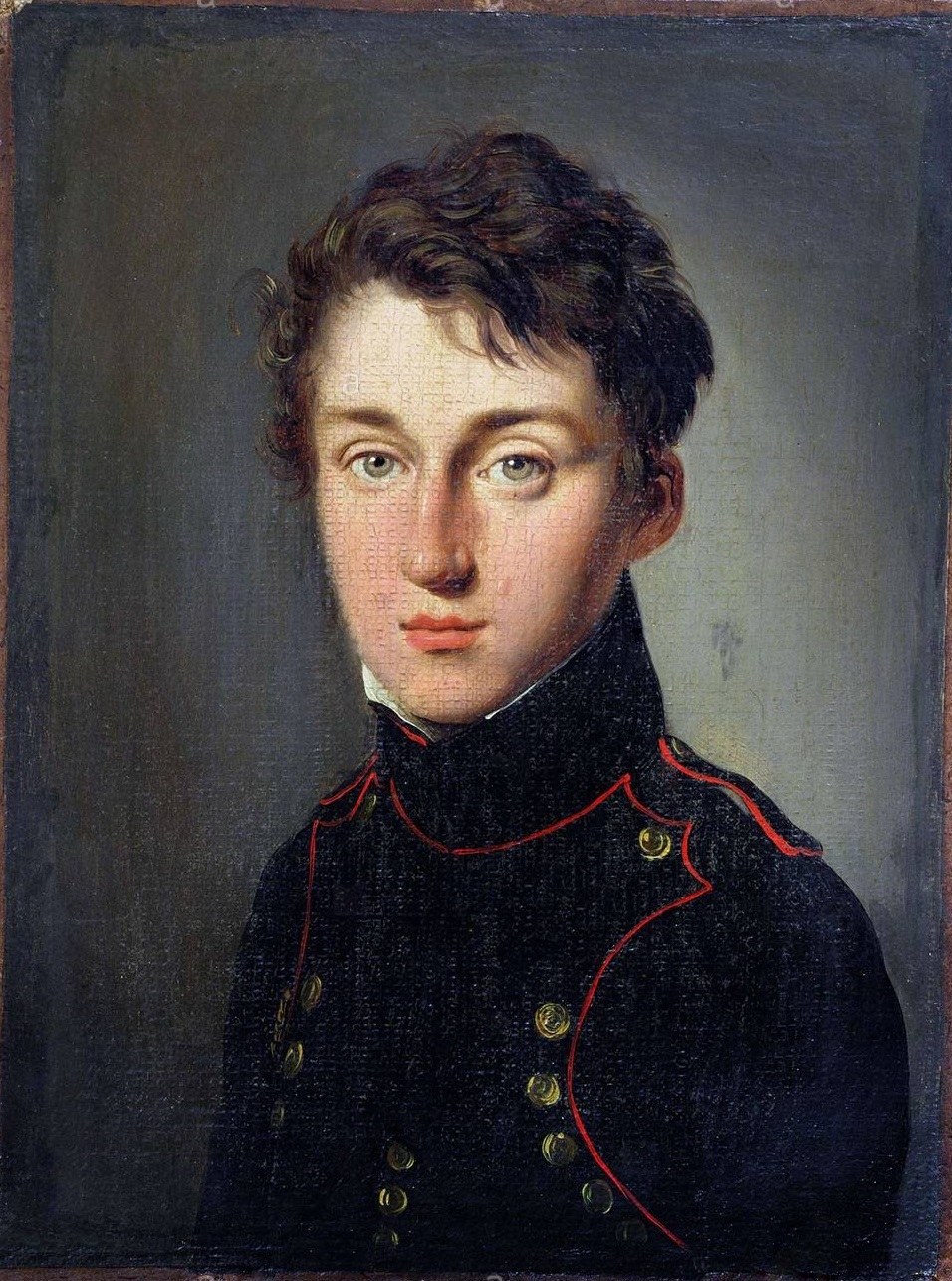
Sadi Carnot was the son of one of Napoleon's generals, and his motivation was national embarrassment: British steam engines were far better than French ones and nobody in France knew why, or how much better they could still get. He wanted a theory of engines that did not depend on whether they ran on steam, air or anything else.
He got one by asking a sharper question than anyone had asked before: not "how do I build a good engine" but "what is the best any engine could possibly be, and what does that best depend on?"
His answer rests on one idea — reversibility. A process is reversible if it can be run backwards through exactly the same sequence of states, leaving no trace anywhere. Nothing in the real world is truly reversible, because friction, turbulence and heat flowing across a temperature gap all leave marks. But you can get arbitrarily close by going arbitrarily slowly, and the ideal is worth studying because of the following argument.
No engine can be more efficient than a reversible engine running between the same two temperatures.
The proof is a trap. Suppose someone hands you a super-engine S with efficiency higher than a reversible engine R. Run S forwards as an engine. Run R backwards as a refrigerator — you can do that, because it is reversible — using S's work output to drive it, and arrange the sizes so that R pumps exactly Q_H back into the hot reservoir, the same amount S takes out.
Now the hot reservoir is untouched: what left it went straight back in. So it can be removed from the picture entirely. Since S was more efficient, it needed less heat input per unit of work than R gives back per unit of work consumed, so there is work left over. That leftover work came from the cold reservoir and from nowhere else.
Result: a machine that takes heat from a single cold reservoir and turns it entirely into work. Kelvin–Planck broken. So the super-engine cannot exist.
Two corollaries follow immediately, and both are remarkable:
- All reversible engines between the same two temperatures have exactly the same efficiency. (If two differed, use the better one to drive the worse one backwards and repeat the argument above.)
- That efficiency cannot depend on the working substance. Steam, air, helium, a rubber band — irrelevant. It can depend only on the two temperatures, because those are the only things left in the problem.
Carnot reached this in 1824 while still believing heat was the conserved fluid called caloric. His conclusion survived the death of his own theory, which is about as strong a sign as physics ever gives that an argument was correct for reasons deeper than its author knew.
The Carnot cycle, built and computed
To find the actual number, build a reversible cycle out of the processes from Chapter 3.3. Only two of the four can be reversible while in contact with a reservoir:
- Isothermal steps, where the gas stays at exactly the reservoir's temperature, so heat crosses no temperature gap. Heat flowing across a gap is irreversible, so the gap must be zero.
- Adiabatic steps, where no heat flows at all, used to move the gas between the two temperatures without touching either reservoir.
So the cycle is: expand isothermally at T_H, expand adiabatically down to T_C, compress isothermally at T_C, compress adiabatically back up to T_H.

Follow the loop clockwise from the top left. The top curve is expansion at T_H, taking in Q_H. The right-hand steep curve is adiabatic expansion, cooling the gas from T_H to T_C with no heat exchange. The bottom curve is compression at T_C, giving up Q_C. The left-hand steep curve is adiabatic compression back to the start. The area enclosed is W.
Now compute. Label the corners 1 → 2 → 3 → 4.
Step 1 → 2, isothermal at T_H. From Chapter 3.3, \Delta U = 0 and Q_H = W_{12}:
Q_H = nRT_H\ln\frac{V_2}{V_1}
Step 3 → 4, isothermal at T_C. Same formula, and since this is a compression, V_4 < V_3 and the log is negative, meaning heat leaves. Taking Q_C as a positive amount of heat rejected:
Q_C = nRT_C\ln\frac{V_3}{V_4}
The adiabatic steps tie the volumes together. From Chapter 3.3, TV^{\gamma-1} is constant along an adiabatic path. For step 2 → 3:
T_HV_2^{\gamma-1} = T_CV_3^{\gamma-1}
and for step 4 → 1:
T_CV_4^{\gamma-1} = T_HV_1^{\gamma-1}
Divide the first by the second. The T_H and T_C cancel on both sides:
\frac{V_2^{\gamma-1}}{V_4^{\gamma-1}}\cdot\frac{V_1^{\gamma-1}}{V_3^{\gamma-1}} = 1 \quad\Longrightarrow\quad \left(\frac{V_2}{V_1}\right)^{\gamma-1} = \left(\frac{V_3}{V_4}\right)^{\gamma-1}
Take the (\gamma-1)-th root of both sides:
\frac{V_2}{V_1} = \frac{V_3}{V_4}
The two volume ratios are equal. That is the piece of algebra the whole result hangs on, and it is why the cycle needs those particular four steps. Now the logarithms in Q_H and Q_C are identical, so when we form the ratio they cancel:
\frac{Q_C}{Q_H} = \frac{nRT_C\ln(V_3/V_4)}{nRT_H\ln(V_2/V_1)} = \frac{T_C}{T_H}
Substituting into \eta = 1 - Q_C/Q_H:
\boxed{\eta_{\text{Carnot}} = 1 - \frac{T_C}{T_H}}
Read aloud: eta equals one minus T-C over T-H, with both temperatures in kelvin, because the derivation used the ideal gas law and that law only works in absolute temperature.
Everything about the gas has vanished. The number of moles, the gas constant, the value of \gamma, the actual volumes — all gone. The maximum efficiency of any engine whatsoever depends on nothing but the two temperatures it works between. Carnot's claim, now with a formula attached.
Note also what this says about temperature itself. The ratio Q_C/Q_H for a reversible engine equals T_C/T_H and depends on no material property at all, so it can be used to define temperature — an absolute scale with no reference to mercury, gas, or any particular substance. Kelvin noticed this in 1848, which is why the absolute scale carries his name.
Worked example: a real power station
A coal-fired plant heats steam to 550 °C and condenses it against cooling water at 25 °C. What is the best efficiency it could have, and what does it actually get?
Convert to kelvin — always, without exception:
T_H = 550 + 273 = 823\ \text{K}, \qquad T_C = 25 + 273 = 298\ \text{K}
\eta_{\text{Carnot}} = 1 - \frac{298}{823} = 1 - 0.362 = 0.638 = 63.8\ \%
Real modern coal plants achieve about 40 %. So they run at 40/63.8 = 63 % of the theoretical ideal, and the gap comes from friction, from turbulence in the turbine, from heat leaking through pipe walls, and above all from the fact that a Carnot cycle would have to run infinitely slowly to be reversible, which produces zero power.
The 60 % that leaves as warm water is not waste in the sense of being avoidable. Even a perfect engine would have to dump 36 % of it. Getting that number down requires raising T_H, which is why every improvement in power station efficiency for a century has been a metallurgy story: better alloys let the steam run hotter.
Note also which lever is stronger. Raising T_H by 50 K to 873 K gives \eta = 65.9 %. Lowering T_C by 50 K to 248 K gives \eta = 69.9 %. Cooling is the better lever mathematically — but you cannot cool below your surroundings without spending work to do it, so in practice T_C is fixed at whatever the river or the air is, and only T_H is available.
Worked example: the ocean thermal plant
The tropical ocean surface sits at 25 °C and the deep water a kilometre down is 5 °C. There is an enormous amount of heat in that surface layer. What efficiency could a plant running between them achieve?
\eta = 1 - \frac{278}{298} = 1 - 0.933 = 0.067 = 6.7\ \%
Under 7 %, and a real machine would get perhaps 3 %. This is why ocean thermal energy conversion, despite an inexhaustible free fuel supply, has never been commercially serious: to produce meaningful power at 3 % efficiency you must pump absolutely colossal volumes of water, and the pumps eat most of what you make. The energy is there. The temperature difference is not, and it is the difference that pays.
Refrigerators and heat pumps: the same machine backwards
Run a Carnot engine in reverse and every arrow flips. Put work in, and heat is carried from the cold reservoir to the hot one. That is a refrigerator.
Efficiency is the wrong word here, because what you want is not work out. What you want is heat moved, and what you pay is work. The ratio is called the coefficient of performance, or COP:
\text{COP}_{\text{fridge}} = \frac{Q_C}{W} = \frac{Q_C}{Q_H - Q_C}
For a reversible machine, Q_C/Q_H = T_C/T_H, so dividing top and bottom by Q_H:
\boxed{\text{COP}_{\text{fridge}} = \frac{T_C}{T_H - T_C}}
A domestic freezer holds −18 °C (255 K) in a 22 °C kitchen (295 K):
\text{COP} = \frac{255}{295-255} = \frac{255}{40} = 6.4
The COP is greater than 1, and that is not a violation of anything. You are not creating energy; you are moving it. One joule of electricity moves up to 6.4 joules of heat out of the freezer. Real fridges get 2 to 3.
Notice what happens as the temperature gap widens. A freezer in a hot garage at 35 °C (308 K) has a gap of 53 K instead of 40, so its ideal COP drops to 255/53 = 4.8 — a quarter worse, before any real-world losses. And a machine trying to reach very low temperatures has T_C shrinking towards zero, which sends the COP towards zero as well: the closer you get to absolute zero, the more work each additional degree costs, without limit. That observation is the seed of the third law in Chapter 3.6.
A heat pump is the identical machine with a different goal. You care about the heat delivered to the house, Q_H, not the heat removed from outside:
\text{COP}_{\text{heat pump}} = \frac{Q_H}{W} = \frac{T_H}{T_H - T_C}
Heating a house to 21 °C (294 K) when it is 5 °C (278 K) outside:
\text{COP} = \frac{294}{294-278} = \frac{294}{16} = 18.4
Real units get 3 to 4, which is still the entire argument for heat pumps: an electric resistance heater turns 1 kWh of electricity into 1 kWh of heat and can never do better, while a heat pump turns 1 kWh into 3 or 4 kWh delivered indoors, because most of that heat was already outside and merely needed carrying in. The two COP expressions differ by exactly 1, since Q_H = Q_C + W — the heat pump gets the pumped heat plus the work, which also ends up as heat in the house.
The catch is in the same formula. On a −10 °C night (263 K) the COP falls to 294/31 = 9.5 ideal, and real units drop towards 2, which is exactly when you need the heat most. Cold-climate heat pumps are an engineering fight against that denominator.

Real engine cycles, and why they fall short
No practical engine uses the Carnot cycle, for one blunt reason: it produces almost no power. Reversibility demands infinitely slow operation, and an engine that takes a week per stroke delivers wonderful efficiency and no useful output. Real cycles trade efficiency for speed on purpose.
The Otto cycle — a petrol engine. Adiabatic compression, constant-volume combustion (the spark), adiabatic expansion (the power stroke), constant-volume exhaust. Its ideal efficiency is:
\eta_{\text{Otto}} = 1 - \frac{1}{r^{\gamma-1}}
where r is the compression ratio, the ratio of cylinder volume at the bottom to the top. For r = 10 and \gamma = 1.4: \eta = 1 - 10^{-0.4} = 1 - 0.398 = 60 %. Real petrol engines reach 25–35 %.
The formula says: raise the compression ratio, raise the efficiency. Why not use r = 20? Because at high compression the fuel–air mixture reaches the ignition temperature by compression alone, before the spark — the fire-piston effect from Chapter 3.3 — and detonates at the wrong moment. That is engine knock, it is destructive, and it is the ceiling on petrol compression ratios. Higher-octane fuel resists it, which is the entire meaning of the octane number at the pump.
The Diesel cycle sidesteps knock by compressing air alone, with no fuel present to detonate, then injecting fuel into air already hot enough to light it. Compression ratios of 18–22 become possible, which is why diesel engines are 35–45 % efficient and why they are used wherever fuel cost dominates.
The Rankine cycle is what power stations run: water pumped to high pressure, boiled, expanded through a turbine, condensed back to water. It uses a phase change deliberately, because pumping a liquid costs almost nothing while compressing a gas costs a great deal.
Where this shows up in your life
Your laptop gets warm and cannot avoid it. Every joule of electricity a computer consumes ends up as heat — the computation itself stores nothing. A 65 W laptop is a 65 W heater, and cooling it is a matter of getting that heat to somewhere cooler, which is why performance falls in a hot room.
The back of your fridge is warm, and it must be. It is rejecting Q_H = Q_C + W: everything it removed from the food plus everything the compressor consumed. This is why leaving the fridge door open cools nothing — the machine dumps more heat into the kitchen than it removes from the open interior, so the room slowly gets warmer.
A nuclear plant's cooling towers are not there for the reactor's sake. They are the cold reservoir, and the drifting white plume is Q_C leaving. No cold reservoir, no engine.
A car's radiator is the same thing. About a third of the fuel's energy goes out the exhaust and another third out of the radiator, and only the last third turns the wheels. The radiator is not fixing an inefficiency; it is performing the mandatory function of being the cold side.
And the reason perpetual motion machines are refused patents without examination. Every national patent office refuses applications for machines claiming to violate the first or second law, without reading the drawings. That is not closed-mindedness. It is the accumulated verdict of two centuries in which no exception has ever been found, and Carnot's argument above shows that if one were found, you could use it to build a machine that cools a single reservoir and produces free work forever — which would break not one law but the entire structure resting on it.
What the next chapter fixes
The second law has been stated as a prohibition — you may not do this, you may not do that — and the Carnot result came out of a clever argument about running engines backwards. That is unsatisfying. A law this fundamental should have a quantity attached to it, something you can compute for any process and watch increase. Chapter 3.5 finds that quantity, defines it twice by two completely different routes that turn out to agree, and shows that it is the same thing as the information entropy of Volume I, Chapter 1.8. It is also the only quantity in all of physics that can tell the past from the future.