Appearance
15.8 — Lactation and the Newborn
Breast milk composition changes across a single feed, across a day, across the months of feeding, and — remarkably — in response to the infant's own state. Milk produced for a premature baby differs from milk produced at term. Milk produced when the mother has an infection contains antibodies against it.
It is a dynamic secretion rather than a fixed product, and that is the most interesting thing about it.
This chapter also states the evidence on breastfeeding honestly, including where it is weaker than commonly claimed, because the messaging in this area has caused real distress to women who could not or chose not to breastfeed.
How lactation works
Preparation happens throughout pregnancy. Oestrogen and progesterone develop the ducts and the milk-producing alveoli, and prolactin rises steadily.
And milk production is actively blocked until delivery. High progesterone from the placenta inhibits prolactin's effect on the breast.
The trigger is the delivery of the placenta. Progesterone collapses within hours, the block is released, and copious milk production begins at around 30 to 72 hours.
Which explains two things.
Why milk "comes in" on day 2 to 4 rather than at birth — and why colostrum is what is available before then, in small volumes, which is entirely normal and is frequently mistaken for failure.
And why retained placental fragments delay lactation, because progesterone remains high.
Two hormones then run it, and they do different jobs.
Prolactin — production. Released from the anterior pituitary in response to suckling. Levels rise with each feed and fall between.
Oxytocin — ejection. Released from the posterior pituitary, causing the muscle-like cells around the alveoli to contract and squeeze milk into the ducts.
And this is the let-down reflex, which is worth understanding because it is where most difficulty arises.
Milk stored in the breast is not accessible to the infant without let-down. The infant can only remove a small proportion by suction alone; the rest requires ejection.
Oxytocin release is a neuroendocrine reflex, and it is affected by state. It can be triggered by hearing a baby cry, or by thinking about the baby. And it is inhibited by pain, anxiety, embarrassment and stress — sympathetic activation opposes it.
Which is why a stressed, painful or observed mother may produce less milk despite having plenty, and why the practical intervention is comfort, privacy and pain relief rather than exhortation.
And oxytocin also contracts the uterus, which is why breastfeeding causes afterpains in the early days and why it reduces postpartum bleeding.
Supply is controlled locally as well as hormonally.
Milk contains a feedback inhibitor: when the breast is full, the accumulated inhibitor slows production. When it is drained, production increases.
So supply is regulated breast by breast, by removal.
Which is the most practically useful fact in this chapter. Milk supply responds to how much milk is removed, not to how much the mother drinks, eats or rests. Frequent effective removal increases supply; leaving milk in the breast reduces it.
And it is why supplementing with formula reduces supply — less removal, less production — and why expressing can increase it.
What is in breast milk
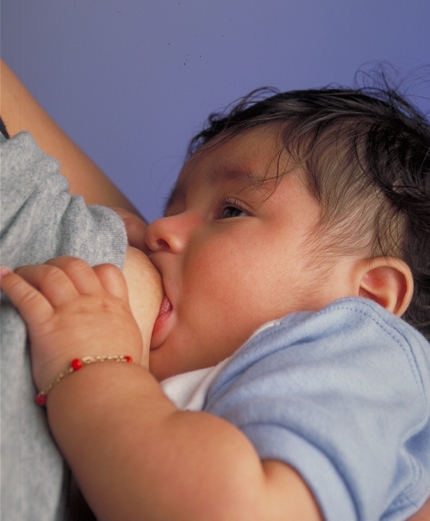
Colostrum — the first few days. Small volumes, 40 to 50 ml a day initially, thick and yellow.
Very high in protein, particularly antibodies — IgA at concentrations far above later milk (Chapter 13.3) — and in white cells, growth factors and vitamin A.
And it has a laxative effect, helping the infant clear meconium and therefore clear bilirubin, which reduces jaundice.
The small volume is appropriate. A newborn's stomach holds about 5 to 7 ml on day 1 — roughly a teaspoon — and around 60 ml by day 10. Colostrum is matched to that capacity, and worry about "not enough milk" in the first days is usually worry about a system working as designed.
Transitional milk — days 3 to 14.
Mature milk — from about two weeks. Around 87 percent water, 7 percent lactose, 4 percent fat, 1 percent protein.
And its composition changes within a feed. Foremilk at the start is more watery; hindmilk at the end is considerably higher in fat.
Which is why finishing one breast before offering the other matters more than "ten minutes each side", and why a baby switched too early may take a large volume of low-fat milk and be hungry again quickly.
What is in it beyond nutrition:
Antibodies, particularly secretory IgA, coating the infant's gut (Chapter 13.3).
And the enteromammary link is genuinely elegant. Immune cells that have sampled pathogens in the mother's gut and airway migrate to the breast and produce antibody there. So the milk is targeted against the organisms in the environment the mother and baby share, and it updates continuously.
Live white cells.
Human milk oligosaccharides — complex sugars that the infant cannot digest at all. They are food for specific gut bacteria, shaping the infant microbiome deliberately (Chapter 9.6), and they also act as decoys that pathogens bind to instead of binding to the gut wall.
Lactoferrin, binding iron so bacteria cannot use it. Lysozyme. Growth factors. Hormones. Enzymes including lipase, which helps the infant digest the fat.
And stem cells, whose function is not established.
Formula reproduces the nutrition and cannot reproduce the antibodies, the live cells or the dynamic adjustment. That is the honest statement of the difference.
The evidence on breastfeeding
And this needs stating carefully, because the field has a confounding problem that is frequently ignored.
In high-income countries, women who breastfeed differ systematically from women who do not — in education, income, smoking, and much else. So observational associations between breastfeeding and good outcomes are heavily confounded.
What the strongest evidence shows:
In low-resource settings the benefits are large and unambiguous. Breastfeeding substantially reduces death from diarrhoeal disease and pneumonia, because it provides antibodies and avoids contaminated water. This is not marginal — it saves very large numbers of infant lives.
In high-income settings, the well-supported benefits are more modest but real: reduced gastrointestinal and respiratory infections in infancy, reduced necrotising enterocolitis in preterm infants — where the effect is large — and reduced risk of sudden infant death syndrome.
For the mother: reduced risk of breast and ovarian cancer, and of type 2 diabetes.
Where the evidence is weaker than commonly claimed: long-term intelligence, obesity and allergy.
The PROBIT trial in Belarus randomised a breastfeeding promotion intervention across maternity hospitals — the closest thing to a randomised trial that is ethically possible. It found reduced gastrointestinal infection and eczema, and did not find the reductions in obesity, allergy or blood pressure that observational studies had suggested. It did find a modest cognitive difference.
And sibling studies — comparing breastfed and formula-fed children within the same family, which controls for most confounding — find most of the long-term differences shrink substantially or disappear.
So the accurate position: breastfeeding has real benefits, the largest of which are in infancy and in low-resource settings; the long-term claims are weaker than the messaging suggests; and formula feeding in a high-income setting with clean water produces children who do well.
Stating that is not discouraging breastfeeding. It is being accurate, and accuracy matters because the guilt experienced by women who cannot breastfeed is a genuine harm, and it is caused partly by overstated claims.
The WHO recommends exclusive breastfeeding for six months and continued breastfeeding alongside food for two years or beyond. Actual rates fall far short everywhere, and the reasons are largely structural — inadequate support, short parental leave, and workplace barriers — rather than individual choice.
Common difficulties, and what actually helps
Almost all early breastfeeding problems come down to latch, and almost all are fixable with skilled help.
Painful nipples — pain beyond mild initial tenderness indicates a shallow latch, and it is not something to be endured until it toughens up. The infant should take a large mouthful of breast, not just the nipple. Correcting the latch usually resolves it within a day or two.
Also consider tongue-tie, where a tight frenulum restricts tongue movement. Division is a quick procedure and helps when it is genuinely restricting feeding — and it is also over-diagnosed, so assessment by someone experienced matters.
And thrush, causing burning pain persisting after feeds, which requires treating both mother and baby.
Engorgement — days 3 to 5, from the increase in milk plus tissue swelling. Frequent feeding, cold compresses between feeds, and reverse pressure softening to make the areola compressible enough to latch onto.
Blocked duct — a tender lump. Continue feeding from that breast, warmth before feeding, and gentle massage.
Mastitis — a painful, red, hot wedge-shaped area with fever and flu-like symptoms.
And the critical point: continue feeding from the affected breast. Stopping makes it worse, because milk stasis is the underlying problem. Antibiotics are needed if symptoms persist beyond 12 to 24 hours or are severe, and untreated mastitis can progress to an abscess.
Low supply — genuinely low supply is far less common than perceived low supply.
The reliable indicators of adequate intake are output and weight: at least 6 heavy wet nappies a day after the first week, regular stools, and appropriate weight gain. Not how the breast feels, not how long the feed lasts, and not how much can be expressed — a pump is much less efficient than a baby.
Genuine causes: retained placenta, insufficient glandular tissue, previous breast surgery, thyroid disease, and certain drugs.
And an important one that is often missed: a baby who is not removing milk effectively. The problem is transfer, not production, and it is corrected by fixing the latch rather than by adding formula.
Weight loss after birth is normal — up to 7 to 10 percent — with birth weight regained by about 2 weeks.
Medications and breastfeeding — most are compatible, and women are frequently and unnecessarily told to stop. Reliable references exist and should be consulted rather than relying on the manufacturer's precautionary wording, which is written for legal rather than clinical reasons.
The newborn
Physiological changes at birth — Chapter 7.9.
Normal newborn observations: heart rate 110 to 160, respiratory rate 30 to 60, temperature 36.5 to 37.5 °C.
Feeding — 8 to 12 times in 24 hours in the early weeks, including at night. Cluster feeding in the evenings is normal and is frequently interpreted as insufficient milk.
Sleep — 14 to 17 hours a day in short blocks. Newborns have no circadian rhythm; it develops over about 3 months (Chapter 12.7).
Weight — regain birth weight by 2 weeks, then roughly 150 to 200 grams a week.
Common and normal findings that alarm parents:
Jaundice from day 2 to 3, peaking around day 5, resolving over 1 to 2 weeks (Chapter 9.4). Jaundice in the first 24 hours or persisting beyond 2 weeks is not normal and needs assessment.
Periodic breathing — pauses of up to 10 seconds. Longer pauses, or pauses with colour change, are not normal.
Milia, erythema toxicum, and a range of transient rashes.
Withdrawal bleeding or breast swelling in either sex, from maternal hormones.
Sneezing, hiccups and startles.
When a newborn needs urgent assessment:
Fever above 38 °C in a baby under 3 months — an emergency, because newborns cannot localise infection and can deteriorate within hours. Full assessment including blood tests and often lumbar puncture, with antibiotics started immediately.
Poor feeding, lethargy, or being difficult to wake.
Grunting, nasal flaring, or chest recession (Chapter 8.3).
A rash that does not fade under pressure (Chapter 11.10).
Bilious vomiting (Chapter 4.5).
Jaundice in the first 24 hours.
Reduced wet nappies.
And a general principle: a parent who says something is wrong with their baby is usually right, and that judgement outperforms most single clinical signs.
Sudden infant death syndrome
Rates have fallen by around 80 to 90 percent in most countries since the early 1990s, and the reason is a specific set of changes in sleep practice — one of the most effective public health interventions in paediatrics.
The safe sleep advice:
On the back, for every sleep. This single change accounts for most of the reduction.
In the same room as the parents for the first six months, in a separate cot.
Feet at the foot of the cot, with blankets tucked no higher than the shoulders — or a sleeping bag.
Firm flat mattress, no pillows, no bumpers, no loose bedding, no soft toys.
Not too hot. Room temperature 16 to 20 °C.
Smoke-free environment, before and after birth.
And on bed-sharing, the honest position rather than a blanket prohibition. Bed-sharing carries an increased risk, and the risk is dramatically higher in specific circumstances: if either parent smokes, has drunk alcohol or taken sedating drugs, if the baby was premature or low birth weight, or if sleeping on a sofa or armchair — which is the most dangerous situation of all.
Many parents will bed-share, planned or unplanned. Telling them never to do it and leaving it there results in unplanned falling asleep on sofas, which is worse. Giving the specific risk factors allows a safer decision.
Breastfeeding reduces the risk. Dummy use at sleep appears to reduce it.
What the next page fixes
The infant becomes a child and then, over a few years, a physiologically different person. Chapter 15.9 covers puberty in both sexes — the sequence, the timing, what drives it, and what is normal variation and what is not.